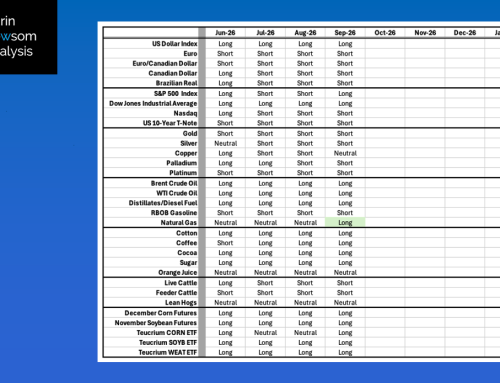
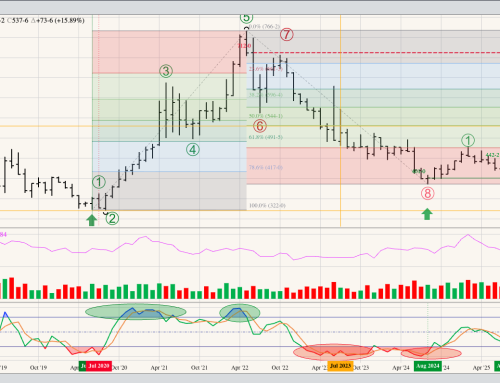
As 2026 gets under way, I want to take a moment to summarize some of what I talked about in Monthly Analysis and take a look ahead at what the new year might bring. As I talked about in my latest Weekly Column (Salad, It’s What’s for Dinner?), there are at least two things we know are absolutes (setting aside the Vodka Vacuity for a moment) over the coming months:
- US interest rates will come down. Charlie Horse (of Shari Lewis fame) will make sure of that. A look at the Fed fund futures forward curve (slide 2) shows the market is pricing in 25-basis points cuts at the end of the April and September meet Federal Open Market Committee meetings.
- Despite the expected weakening of the US dollar due to expected rate cuts, global trade with the United States is expected to worsen, confirming global trade these days has more to do with politics than economics.
Let’s take a look at individual market sectors.
Equities: Are major US stock indexes overbought? Probably. Are stocks overvalued? Also, probably. Does this mean the equities sector could collapse this year? Probably not. But much like 2025, I think there will be commodity sectors and markets that outperform equities again this coming year.
Metals: I don’t see any reason for buying to abate during 2026, and yes that is accounting for already record high prices.
- Gold: The reality of continued cuts to interest rates will fuel inflation fears. Additionally, the chaos swirling around the US administration (China, Russia, Venezuela, Canada, Mexico, etc.) will keep central banks around the world buying gold.
- Silver: Ben was one of the first fund managers who spotted the price relationship between gold and silver got out of line last year and positioned accordingly. Q4 of 2025 saw silver show characteristics of both a short-supply (short-term price spike) and demand driven (long-term change in price expectation) markets. As we saw in late December, selloffs will be met with renewed buying interest, particularly with the threat of China doing something militarily in Taiwan in response to the US illegal action in Venezuela the first weekend of 2026.
- Copper: It will be interesting to see what copper, the economic indicator, does this year. I thought it was riding the coattails of gold and then silver during 2025, but we should soon learn if it has support under its recent rally. I don’t know that global economies are set for growth, the traditional fundamental behind a stronger copper market, so we’ll see.
Energies: There is nothing I like about this sector. That being said, with every market trolling along near the bottom of long-term price ranges and a US administration that is petroleum friendly, long-term investors could be looking for a reason to buy. However, the deferred part of crude oil’s forward curve has moved from backwardation to contango (inverse to carry) meaning our commercial read is starting to line up with the Law of Supply and Demand.
Softs: The market that stands out to me here is coffee, with its inverted forward curve. This could be telling us supplies continue to lose ground to demand globally, with the world’s largest producer and exporter being Brazil. The tendency is for some of the money in equities to be rolled to commodities with bullish fundamentals, and coffee seems to fit the bill. This will be a market to watch early in the year.
Livestock: Speaking of bullish futures spreads possibly attracting investment money, we need to keep an eye on both live cattle and feeder cattle. Q4 of 2025 saw a manipulated selloff in both cattle markets, turning technical indicators bearish. However, futures spreads continue to indicate supplies are tight in relation to demand for the foreseeable future. There are a couple hurdles that will have to be cleared in 2026, though. First, USDA’s mission is to continue to release bearish numbers, real or not. The US president blamed high beef prices for his regime’s poor performance the latest election and wants them lowered anyway possible. And we know legal procedures aren’t a necessity. Additionally, the president’s unending desire for lower interest rates and higher inflation could mean consumer demand for US beef hits a tipping point in 2026.
Grains: There isn’t much to get excited about in this sector looking ahead to the new year.
- Corn: I still like being long the market, either Dec corn futures or the Teucrium CORN ETF, just not as much as I did last August. The latter half of 2025 saw futures spreads, most notably the May-July, slowly cover more calculated full commercial carry indicating a less bullish commercial outlook. Looking ahead to spring planting, the Dec26 futures contract continues to potentially buy acres away from Nov26 soybeans.
- Soybeans: From a technical point of view, long-term investors could be long both Nov26 soybeans and the Teucrium SOYB ETF. However, as I said in Grains Analysis, I don’t like either position. Recent actions by the US president open the door wider to cancellations of export sales by the world’s largest buyer. This possibility is enhanced by the idea Brazil’s 2026 soybean crop is getting larger, as indicated by the March-May futures spread covering more calculated full commercial carry. There will be some rallies in soybeans over the coming year, most likely manufactured by misinformation from the US administration, but as we saw during 2025, these rallies won’t have fundamental support.
- Wheat: The bottom line for all three wheat markets is National Cash Indexes continue to run below previous 5-year end of month lows. Moving forward, more attention will be paid to weather across the US Plains and Midwest. If moisture conditions cooperate, the US could add more supplies to an already burdensome supply and demand situation. That generally doesn’t result in higher prices, short-term or long-term.
Darin Newsom